Thursday, August 10, 2017

Angelina Jolie in Cambodia

Angelina Jolie has talked about how Cambodia was her "enlivening", as she debuted her new film in the nation.
The performing artist was talking only to the BBC before the screening of First They Killed My Father, a genuine life record of the Khmer Rouge genocide through the eyes of a tyke.
She said she trusted the film, which she coordinated, would help Cambodians to talk all the more straightforwardly about the injury of the period.
Two million individuals passed on.
Jolie, now an UN evacuee office unique agent, first went by Cambodia for the taping of 2001 hit Lara Croft: Tomb Raider.
She later embraced Maddox, her most established child, from Cambodia.
"I resulted in these present circumstances nation and I went gaga for its kin and educated its history, and in doing as such realized, how little I really thought about the world," she told the BBC's Yalda Hakim.
"This nation, for me was my enlivening.
"I'll generally be exceptionally appreciative to this nation. I don't think I ever could give back as much as this nation has given me."
'Not legitimately caught on'
To start with They Killed My Father depends on a book of a similar name by Loung Ung.
Ms Ung was five when she and her family were compelled to leave their home in the capital, Phnom Penh, by the Khmer Rouge, the administration which ran the nation in the vicinity of 1975 and 1979, under Pol Pot.
It is evaluated that two million individuals, around a fourth of the populace, were either killed by the administration or kicked the bucket from starvation and exhaust.
"I suspected that this war happened 40 years back, and what happened to these individuals, was not legitimately comprehended," said Jolie.
The film is prevalently in the nearby Khmer dialect, and Jolie said that while she needed the more extensive world to better comprehend occasions in Cambodia she trusted it would have an effect locally as well.
"I trust it enables the nation to talk more," she stated, the same number of survivors "haven't recounted their kids their story".


Monday, June 15, 2015

David Beckham Traveling Angkor Wate Temple

He's been investing energy in Cambodia, meeting powerless kids at a safeguard focus in his part as UNICEF Goodwill Ambassador.
Furthermore, and additionally doing his obligation in the Southeast Asian nation, David Beckham has likewise had the opportunity to visit some of its most shocking sights.
On Tuesday, the 40-year-old resigned footballer shared a regular traveler style picture on his Instagram page, unmistakably awestruck about his brief span in the nation. 


Alongside a photo of himself before the tree-shrouded Ta Prohm sanctuary in Angkor in the Siem Reap Province he spouted about his encounters.
'Had a mind blowing time in Cambodia met some astounding individuals, the youngsters were really persuasive .. In the event that you ever find the opportunity to visit Cambodia then Ta Prohm ought to be on your list...'
The nice looking star radiated in the shot, grasping his very own substantial camera, almost certainly loaded with significantly more snaps from his chance in the nation.
Another shot posted on his online networking page demonstrated the spouse of Victoria Beckham remaining before one more of the nation's points of interest.
He composed: 'Astounding day in Cambodia going to the Angkor Wat sanctuary .... A standout amongst the most delightful places on the planet .......'
David has been meeting helpless kids at a safeguard focus in the zone as they recuperate from years of enthusiastic and sexual manhandle.
The previous England star set out to Siem Reap a week ago to see with his own eyes the work being done by his 7: The David Beckham UNICEF Fund which is ensuring youngsters in threat.
Pictures discharged on Monday demonstrated the UNICEF Goodwill Ambassador participate with a lesson, where one youthful youngster took an especially unmistakable fascination in his numerous tattoos.
In another, he enables a young lady to handwash her garments.
Beckham, a UNICEF Goodwill Ambassador, stated: 'I am here in Cambodia to meet kids who have encountered brutality, hear their stories and see what UNICEF and its accomplices are doing to guard these kids.
'It is stunning that at regular intervals a tyke bites the dust due to savagery some place on the planet. This needs to stop.'
The star's store enables UNICEF to convey extraordinary projects for kids over the world, including those influenced by brutality in Cambodia.
It was propelled not long ago, his tenth year as a Goodwill Ambassador.
He said he is focused on utilizing his superstar, impact and associations with raise fundamental finances and urge world pioneers to make enduring positive change for youngsters.
The 40-year-old was in Macau, China, on Saturday evening, where he went to the opening service for another H&M store.
In the mean time, it has been uncovered that he has handled a part in Guy Ritchie's most recent film Knights of the Roundtable: King Arthur.
The resigned soccer star has purportedly agreed to accept a section in the Middle Ages epic featuring Charlie Hunnam, Jude Law, Eric Bana and Poppy Delevingne.
A source stated: 'There will be a variant of the scene where Excalibur gets drawn from the stone. This is the place Beckham factors in.'
The football star - who played for England and in addition the clubs Manchester United, Real Madrid and LA Galaxy amid his effective profession as a footballer - is informally credited in movie form database imdb.com as playing 'Blackleg pioneer' in the motion picture, which started shooting this week.

Tuesday, June 9, 2015

The Angkor-Wat Bas-Reliefs


Angkor in Cambodia is home to a standout amongst the most abnormal and noteworthy sanctuaries on the planet; worked in the mid 1100s under the guideline of the Khmer lord Suryavarman, it is encompassed by an enormous, square channel and contains a labyrinth of halls, patios and chambers, over which many-leveled towers linger, in portrayal of Mount Meru, home of the Hindu divine beings.
Beside its solitary engineering, it is additionally incredibly famous for the bas-alleviation figures it contains. Once lavishly plated, they delineate amazing fights between Hindu divine beings and their adversaries, in addition to a substantial number of minor Hindu gatekeeper gods, or 'devatas', which appear to continue hostile to clockwise around the inward dividers. This adds to the hypothesis that Angkor Wat was outlined as a setting for the lord's passing ceremonies, since it confronts west as opposed to the all the more usually picked east.

Tuesday, June 2, 2015

Otres Beach

At the southern end of Occheuteal Beach, past the little headland, Phnom Som Nak Sdach (Hill of the King's Palace), lies dazzling Otres Beach, an apparently unbounded piece of casuarinas that can give southern Thailand a keep running for its cash.
Engineers have for quite some time been looking at Otres Beach, and in 2010 an extend of resorts was coercively evacuated. Notwithstanding, Otres has made yet another recuperation and is right now in discourteous wellbeing with more than 30 lodge resorts in the range, including two or three more upmarket boutique lodgings. Any reasonable person would agree that Otres is not any more the vacant shoreline it used to be. All things considered, Otres has cleaner water and is more casual than anything in Sihanoukville legitimate, and is sufficiently protracted that finding your own particular fix of private sand is not a test... simply walk south. Otres is part into three unmistakable segments: Otres 1 is the first and busiest extend and around 2km south is Otres 2, isolated by a slated resort improvement and as of now known as 'Long Beach'. Inland lies laidback Otres Village, an exceptional estuary territory.
Otres additionally has a growing scope of exercises on offer. At the northern end of the shoreline (close where you land from Sihanoukville) you'll discover Hurricane Windsurfing , which leases paddle sheets (every hour US$8), windsurfers (fundamental/superior sheets every hour US$10/20), ocean kayaks (single/pair every hour US$4/6) and skim sheets (attempt bungee skim boarding). Otres Beach now and again gets surf from May to October; you can lease surfboards and bodyboards here too.There are additionally different flying contraptions for the overcome, including flyboards (flyboardcambodia.com) and land and/or water capable microlights with stay with one traveler.
Around 700m south, close to the primary group of guesthouses, you'll discover Blue Lagoon Kitesurf Center . It's situated at Sunlord Seagarden resort. The proprietor additionally runs day by day pontoon visits to four islands (per individual US$15 including breakfast, lunch, snorkeling and a drink or two).
Path down at the shoreline's tired southern end on Otres 2 is Otres Nautica , a laidback, French-run equip that rents couple ocean kayaks (every hour US$4) and Hobie Cat cruising sailboats (every hour US$10) that you can take out to close-by islands. It likewise has a pontoon for snorkeling or island-bouncing journeys.
Otres Beach is around 5km south of the Serendipity region. It's a US$2/5 moto/remork ride to arrive (more around evening time). In the case of going only it, take after the street southeast along the shoreline and skirt the slope by headling inland on the intriguing landing area. From the downtown area, you can take Omui St from Psar Leu east away for 5km.


Without a doubt, Sihanoukville could never win initially prize in a lovely town rivalry yet because of an encompassing coastline of white-sand shorelines and sun-doused islands, this is Cambodia's most incident sun-sloth goal. The Serendipity Beach region is a kind of decompression chamber for hikers, who run here to rest up amongst ventures and gathering as the night progressed.

Considerably further far from the hustle, in the most distant south of town, is casual Otres Beach, where shoddy lodge joints and bohemian-seasoned guesthouses are presently neighbors with rather wash boutique resorts. The smooth scene here ticks all the crates in case you're searching for apathetic days of sunbathing instead of evening time having a good time.

Past Otres, the courageous can discover sandy strips rimmed by casuarina trees and coconut palms to have all to themselves. Sihanoukville is additionally the bouncing off point to Cambodia's southern islands, where castaway-cool calls.


Kirirom National Park

Kirirom Mountain/National Park is a one of a kind scene in Cambodia. In an elevation over 600m height wide pine tree woods spread out. It looks here everything except Cambodian, rather mediterranean. Fauna and greenery are not quite the same as somewhere else. "Kirirom" signifies 'joy', yet it's not an upbeat place here. The hush of the nature gave me extremely peacefull emotions.
The recreation center is occasionally gone to by Westerners, it's off the beaten track and difficult to reach. Open transport bombs, as so regularly, so one needs to lease a possess vehicle with or without driver.
Outside the recreation center, at the foot of Kirirom Mountain lies Chambok Village. Here are a few decent family homestays. Extremely basic spots. They don't have names yet numbers. I made a decent involvement in homestay 26.
By the by, the nature here is under serious danger. Poaching, illegal conflagration, logging and an uncontrolled exchange with the "items" of the timberland corrupt the nature to an ever increasing extent. There are tremendous building destinations in the recreation center - resorts, new streets and ranting buddhist sanctuaries are under development or, somewhat, effectively wrapped up. Junk is wherever where individuals go. New settlements are worked, for more individuals who live here, and they are developing.
There is the ususally segregating extra charge for outsiders (5 US$). It's ten times the cost as the nationals pay, on the off chance that they pay anything. The cash is squandered, in light of the fact that common assurance here doesn't occur.


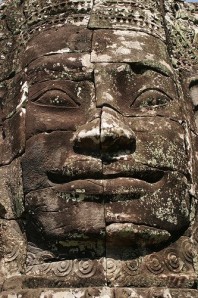
Bayon Temple

Wherever yWherever you turn at the Bayon you're being seen… After Angkor Wat, the Bayon is doubtlessly the best known Khmer haven in the Angkor area, celebrated for its various calm stone appearances. They're mammoth, seeing over everything toward every way, completing by far most of the asylum's towers. The 216 enormous defies look to some degree like Jayavarman VII who's accountable for building the twelfth Century asylum, yet it's obscure if that was an exhibit of cajole as for the talented laborers and masters or not. Scientists believe the faces are genuinely anticipated that would depict the bodhisattva of compassion Avalokitesvara. It's sensible reality lies some place amidst, and Jayavarman, a Buddhist, saw himself as to some degree a bodhisattva and probably truly minding as well. The Bayon was the important Buddhist asylum to be worked in Angkor and the last wonderful state haven, however it's been altered and added to by resulting rulers, especially as Hinduism beat Buddhism as the Angkor religion of choice. The face towers are truly thought to be an after sight, like an upwards development, and there's no obvious reason behind the amount of towers or number of faces on each tower – at one time there were 49 towers yet at this moment there are 37 up 'til now standing.
The Bayon is moreover remarkable for its bas reliefs, there are two regions particularly, which relate an extensive variety of stories from Khmer history, old stories and step by step life, lamentably no substance or translation has been consolidated underneath the carvings so analysts aren't clear absolutely which scenes and events are depicted here. Regardless, there's a truly invigorating scene with some Chinese troopers and an elephant and specialists, and furthermore some mind boggling sea battles, again with what have every one of the reserves of being Chinese warriors and shippers.
In all likelihood the thing the Bayon is best known for is being at the to a great degree point of convergence of the city of Angkor Thom, it doesn't have the as a general rule dividers of channels, just the dividers of the city incorporating itou turn at the Bayon you're being viewed… After Angkor Wat, the Bayon is most likely the best known Khmer sanctuary in the Angkor region, celebrated for its numerous quiet stone appearances. They're mammoth, viewing over everything toward each path, finishing the vast majority of the sanctuary's towers. The 216 huge confronts look to some extent like Jayavarman VII who's in charge of building the twelfth Century sanctuary, yet it's vague if that was a demonstration of sweet talk with respect to the skilled workers and specialists or not. Researchers trust the countenances are truly expected to portray the bodhisattva of empathy Avalokitesvara. It's reasonable reality lies some place in the middle of, and Jayavarman, a Buddhist, viewed himself as somewhat of a bodhisattva and most likely genuinely caring too. The Bayon was the principal Buddhist sanctuary to be worked in Angkor and the last awesome state sanctuary, however it's been modified and added to by ensuing rulers, particularly as Hinduism outperformed Buddhism as the Angkor religion of decision. The face towers are really thought to be an after sight, similar to an upwards expansion, and there's no conspicuous purpose behind the quantity of towers or number of countenances on each tower – at one time there were 49 towers yet right now there are 37 as yet standing.
The Bayon is additionally outstanding for its bas reliefs, there are two areas specifically, which recount a wide range of stories from Khmer history, folklore and day by day life, tragically no content or interpretation has been incorporated underneath the carvings so researchers aren't clear precisely which scenes and occasions are portrayed here. In any case, there's a really energizing scene with some Chinese troopers and an elephant and artists, and also some incredible maritime fights, again with what have all the earmarks of being Chinese warriors and shippers.
Most likely the thing the Bayon is best known for is being at the extremely focal point of the city of Angkor Thom, it doesn't have the more often than not dividers of canals, only the dividers of the city encompassing it.


Ta Keo

Shiva was tricked out of this sanctuary, it was committed in around 1000, yet for reasons unknown it was never completed so has none of the resplendent carvings of the Bayon or Angkor Wat. Work was halted on it when another lord came into control ten years after the commitment, yet a few researchers think it was dropped in the wake of being hit by a lightning jolt which was deciphered as an awful sign. The towers at the highest point of the sanctuary do ascend to 50 meters off the ground so it is one of the tallest focuses around.
This is one of the 'mountain style' Khmer sanctuaries which were constructed upwards like pyramids or Mayan sanctuaries as opposed to level and sprawling like close-by Ta Prohm. They for the most part speak to Mount Meru, the home of the Hindu divine beings. In Ta Keo's case it's a square and general sort of mountain beat by five towers, one at every cardinal point and one in the inside. It's a precarious move to the best along limit walkways, significantly more conservative than those of Angkor Wat, and when you begin climbing you can't really observe to the best.
The main sanctuary to be worked from sandstone it's additionally the primary sanctuary to have a completely encased internal display. It languishes absence of guest claim over its stark adornment however its seriousness enables guests to better welcome the outlining and design ability of the Khmer individuals.


Angkor Thom


The assortment of crumbling sandstone temples, palaces and monuments of Angkor Thom covers nine square kilometres of jungle. Its 12th century founder, the king of the Khmer empire, had a romantic attachment to beautiful architecture and built profusely during his reign, focusing the main body of construction on his home and capital Angkor Thom, which translates to ’great city’.
The scale is large, huge heads and giant monsters decorate and protect the city. On one of the ruins there is what appears to be a dinosaur carved amongst familiar modern animals. The main structure that remains is a huge pyramidal Hindu temple surrounded by a vast temple complex. Eight metre high walls protect much of the city and all roads lead to the centre Bayan. A canal system was part of the original design, but like many of the secular and non palatial buildings it has been grown over with forest.

Angkor Thom remained the capital until it was abandoned some time before 1609, for some reason any repair work on the city was done in inferior materials and these sections were the first to crumble. When it was discovered by Europeans, who initially thought it was built by the Romans. The whole city was originally surrounded by a 300 foot wide moat filled with crocodiles.
Source : http//:www.worldreview.com

Monday, June 1, 2015

Sras Srang

The name translates to ‘Royal Bath’ and it was built in the second half of the 10th Century by King Rajendravarman, but unlike most of the lakes or bayans at Angkor it’s thought that this reservoir was once a natural lake, which is why it still holds water when most of the other lakes have dried up. It’s about 350 metres by 700 metres, so a generous sized swimming pool and probably difficult to keep clean, which is why Rajendravarman had signs put up warning people not to pollute it by letting their farm animals or elephants bathe in it.
A landing platform built at the western end of the reservoir was added to the layout in the 13th Century and is a popular spot for watching the sunrise. The dikes also received decorative sandstone cladding at the same time and the pool was shortened.


 Source:http://www.worldreviewer.com

Ta Phrom Temple


This is one of the familiar faces of Angkor – literally. Ta Prohm is the temple with the big face on the rounded front of it that appears in numerous photos of Angkor. It was built as a monastery and university in the late 12th or early 13th Century and these days is one of the few temples that has been left in its originally re-discovered over grown state. Efforts have been made to protect the temple from merging any further with the jungle though, it’s kept in a carefully maintained aura of ‘apparent neglect’. The other unusual thing about this temple is the lack of narrative relief work. Some scholars think it was there originally but then removed when the Hindu faith overtook the popularity of the Buddhist one with the leaders. A few Buddhist carvings remain though, mostly depicting temple guardians, monks meditating and dancing girls.
While many of the Angkor temples are built up like the beginnings of pyramids, Ta Prohm is a flat temple built with five shrinking walls all around a central sanctuary. The outer wall is about 1000m by 650m. The purist layout has been slightly garbled by later additions including a large library in the southeast corner.
The temple has it’s own records printed on it, one of them is a bit of a census and says the temple was home to more than 12,500 people including 18 high priests and 615 temple dancers, and that there were around 80,000 more people living in the vicinity in the town that surrounded it.
The face is Prajnaparamita, the personification of wisdom – but it looks quite similar to the statues and records of the King’s mother…


Source:World Reviewer Staff.

Angkor Wate Temple


There are two great complexes of ancient temples in Southeast Asia, one at Bagan in Burma, the other at Angkor in Cambodia. The temples of Angkor, crafted by the Khmer civilization between 802 and 1220 AD, represent one of humankind's most astonishing architectural achievements. From Angkor the Khmer kings ruled over a vast domain which reached from Vietnam to China to the Bay of Bengal. The structures one sees at Angkor today, more than 100 stone temples, are the surviving remains of a grand religious, social and administrative metropolis whose other buildings - palaces, public buildings, and houses - were built of wood and are long since decayed and gone.
Conventional theories presume the lands where Angkor stands were chosen as a settlement site because of their strategic military position and agricultural potential. Other scholars however, believe the geographical location of the Angkor complex and the arrangement of its temples was based on a planet-spanning sacred geography from archaic times. Using computer simulations it has been shown that the ground plan of the Angkor complex – the terrestrial placement of its principal temples - mirrors the stars in the constellation of Draco at the time of spring equinox in 10,500 BC. While the date of this astronomical alignment is far earlier than any known construction at Angkor, it appears that its purpose was to architecturally mirror the heavens in order to assist in the harmonization of the earth and the stars. Both the layout of the Angkor temples and iconographic nature of much its sculpture are also intended to indicate the celestial phenomenon of the precession of the equinoxes and the slow transition from one astrological age to another.
At the temple of Phnom Bakheng there are 108 surrounding towers. The number 108, considered sacred in both Hindu and Buddhist cosmologies, is the sum of 72 plus 36 (36 being _ of 72). The number 72 is a primary number in the sequence of numbers linked to the earth’s axial precession, which causes the apparent alteration in the position of the constellations over the period of 25,920 years, or one degree every 72 years. Another mysterious fact about the Angkor complex is its location 72 degrees of longitude east of the Pyramids of Giza. The temples of Bakong, Prah Ko and Prei Monli at Roluos, south of the main Angkor complex, are situated in relation to each other in such a way that they mirror the three stars in the Corona Borealis as they appeared at dawn on the spring equinox in 10,500 BC. It is interesting to note that the Corona Borealis would not have been visible from these temples during the 10th and 11th centuries when they were constructed.
Angkor Wat, built during the early years of the 12th century by Suryavaram II, honors the Hindu god Vishnu and is a symbolic representation of Hindu cosmology. Consisting of an enormous temple symbolizing the mythic Mt. Meru, its five inter-nested rectangular walls and moats represent chains of mountains and the cosmic ocean. The short dimensions of the vast compound are precisely aligned along a north-south axis, while the east-west axis has been deliberately diverted 0.75 degrees south of east and north of west, seemingly in order to give observers a three day anticipation of the spring equinox.
Unlike other temples at Angkor, Ta Prohm has been left as it was found, preserved as an example of what a tropical forest will do to an architectural monument when the protective hands of humans are withdrawn. Ta Prohm's walls, roofs, chambers and courtyards have been sufficiently repaired to stop further deterioration and the inner sanctuary has been cleared of bushes and thick undergrowth. But the temple itself has been left in the stranglehold of trees. Having planted themselves centuries ago, the tree's serpentine roots pry apart the ancient stones and their immense trunks straddle the once bustling Buddhist temple. Built in the later part of the 12th century by Jayavarman VII, Ta Prohm is the terrestrial counterpart of the star Eta Draconis the Draco constellation.
During half-millennia of Khmer occupation, the city of Angkor became a pilgrimage destination of importance throughout Southeastern Asia. Sacked by the Thais in 1431 and abandoned in 1432, Angkor was forgotten for a few centuries. Wandering Buddhist monks passing through the dense jungles occasionally came upon the awesome ruins. Recognizing the sacred nature of the temples but ignorant of their origins they invented fables about the mysterious sanctuaries, saying they had been built by the gods in a far ancient time. Centuries passed, these fables became legends, and pilgrims from the distant reaches of Asia sought out the mystic city of the gods. A few adventurous European travelers knew of the ruins and stories circulated in antiquarian circles of a strange city lost in the jungles. Most people believed the stories to be nothing more than legend however, until the French explorer Henri Mouhot brought Angkor to the world's attention in 1860. The French people were enchanted with the ancient city and beginning in 1908 conducted an extensive restoration project. The restoration has continued to the present day, excepting periods in the 70's and 80's when military fighting prevented archaeologists from living near the ruins.
Orthodox archaeologists sometimes interpret the temples of the Angkor complex as tombs of megalomaniacal kings yet in reality those kings designed and constructed the temples as a form of service to both god and their own subjects. The temples were places not for the worship of the kings but rather for the worship of god. Precisely aligned with the stars, constructed as vast three dimensional meditational forms and adorned with stunningly beautiful religious art, the Angkor temples were instruments for assisting humans in their realization of the divine.
Jayavaram VII, spoke of his intentions in erecting temples as being “full of deep sympathy for the good of the world, so as to bestow on men the ambrosia of remedies to win them immortality….By virtue of these good works would that I might rescue all those who are struggling in the ocean of existence.”
Photos: Sunrise at Angkor Wat, Angkor, Cambodia
The relentless grip of the jungle at the ruins of Ta Prohm, Angkor, Cambodia
Stone heads of Bodhisattva Avilokiteshvara, Bayon Temple, Angkor, Cambodia